Above the Law

I simply cannot believe that the subject of the difference between the unlimited powers of a King, or Emperor, are being compared and discussed with the limited powers of the people’s elected representative.  Almost every school child is exposed to some part of the roots of this nation which are embedded in the Declaratanthony-garand-500755-unsplashion of Independence and of course our Constitution.  The contention that one person is above the law, and superior to his fellow citizens was dealt with in the very first line; “… We hold these truths to be self-evident, that all men are created equal, ….”.  Note the expression “All men” and its simplicity, not some men, or except the president.

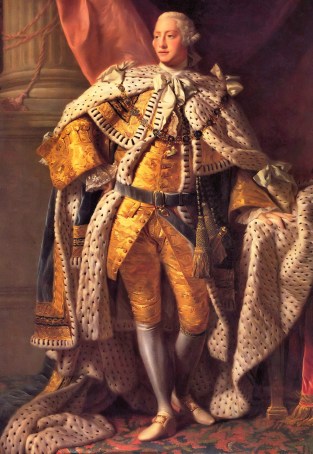
The people who wrote these lines were upset by the actions of King George III and delineated the things that they felt he had no right to do, or cause his government to do, so they listed many of the objections that they felt were beyond his powers to do; ” … The history of the present King of Great Britain is a history of repeated injuries and usurpations, all having in direct object the establishment of an absolute tyranny over these states…”

allan-ramsay-92247_1920For those who never really paid attention in school to the details that incited so many of our ancestors take arms and risk their lives, their liberty, their wealth and the safety of their homes and families, they took the trouble to point out the actions that they felt were King George’s illegal seizure of powers, here are a few of some of his illegal actions that apply to the current discussion; ” …. He has obstructed the administration of justice, ……. He has made judges dependent on his will alone, …… He has erected a multitude of new offices, and sent hither swarms of officers to harass our people. …”

There are some forty other specific violations of English and Colonial laws and customs which, taken in sum indicate that even the King does not have unlimited powers, and justify their actions of rebellion and institution of a newly independent nation, a nation where there would be no King who believed he had unlimited powers. Fifteen years later, after a long bloody struggle these same patriots constructed a government of laws, not men putting an executive at its head, whose term and powers were limited and subject to indictment and removal by the Congress should he be convicted of; “…. Treason, Bribery, or other high Crimes and Misdemeanors…”

Now we have a president in power who may have committed treason by conspiring to tamper with our election procedures, a man who seems to have accepted funds and favors from foreign powers and domestic entities, a man who has repeatedly attempted to block, obstruct and derail the process of justice and investigation into potential criminal acts, a man who has surrounded himself with an assembly of foreign and domestic persons so unworthy of trust and office as to cast serious doubt on his capacity to govern.  And now he and his agents have proffered a legal theory that is inimacable to the wellbeing of the nation’s established rule of law.  It is plain to anyone who can read that our nation was founded and lived by the principle that NO Man, or Woman, not even King George III, is or has been above our laws.  It is time, perhaps past time, for our Congress and all its members to step forward and resume its rightful position as a willing and able participant of this government and not a dupe of an incompetent executive.

© 2018, Charlie Jensen, All Rights Reserved

Sunrise at Sea

During the night at sea, most ships are routinely quiet other than the watchstanders on the bridge and the engineers in the engine room. The passengers, if any, and the crew who are off duty, sleep on, seemingly unaware of the cacophony of sounds that have, in their constancy, become a part of the background, ignored unless some change occurs. When one pump has for some reason to be secured and replaced by a backup, sleeping eyes open, ears cock as much as human ears can, and there is a collective withholding of breath until within moments the new sound is identified and recognized as a friendly sound that can be allowed to continue as a part of the quiet noise that engulfs the vessel as it plods relentlessly through the sea, leaving little more than a temporary trail of phosphorescence behind.

As the early morning hours progress, there are disturbing sounds that begin, first slowly, and then with increasing frequency. The cook, unlocking the door to the galley and firing up the stoves, the mess cooks wiping down the tables and benches, banging away on the decks with brooms or mops, occasionally dropping a dish or a bowl, or even a fistful of eating utensils as they are being prepared to be set for the crews breakfast.

But then there is the smell, if there is a good cook, first of bread baking from loaves of dough that had been readied the night before and left to proof under a damp cloth during the night, then, of bacon or ham sizzling in their fats.

The odor of fresh coffee joins the drifting aromas it blends with the fresh baked bread or rolls, spreading their combined odor throughout the ship, even permeating into the air of the berthing area, which is directly beneath or adjacent to the galley. Early risers slip quietly out of their bunks, quickly shower at what might be the only time of the day when they are able to stand in the ship’s small shower without close company, drying off and dressing in the sailors standard dungaree trousers and chambray shirts. Then they enter the mess room and draw their first cup of coffee, one of many in what will almost always be a long day. Most will take their cup and any rolls that they might acquire out to one of the open weather decks to watch for the Sunrise and examine the sea to determine what kind of day is in store for them.

There is something sexually religious about the smell of salt sea spray combined with fresh coffee and newly baked bread at the moment of sunrise. I do not know what words will explain it adequately but it gives a warm fuzzy feeling to the two or three shipmates who would gather at the rail at the start of the day to watch the star’s light weaken and blend into the fading night’s sky leaving only the brightest for the navigator to use to fix the ship’s location. Often the same few will still gather in the sheltered lee of the deckhouse out of the wind and spray, if there is any, and await the first glimpse of the bright orb breaking the horizon.

In the movies, the sea often is portrayed as an angry succession of waves and windblown spray challenging the safety and wellbeing of the men, and today the women, who choose to sail for their livelihood. The sea may be that way at times but for the majority of the days it is neither angry nor vengeful.

There are many more calm days in the mid-Pacific than there are storm-tossed days, at least in my experience. Even in mild weather, there will usually be waves and often swells from a distant storm half the world away that will cause the ship to tilt gently from side to side rolling in a rhythmic motion that almost all professional seamen find relaxing and comforting.

As the predawn light brightens the few who gathered all know what is about to happen and are aware of the direction of the impending Sunrise. The first burst of color is from rays from the Sun lighting up the underside of the clouds and refracted by any moisture in the air, much like a flattened rainbow. As soon as one sees one array of colors they change, pastels brightening and deepening and then passing on out of view, As the moment arrives, those standing at the rail stop the sailor’s chatter that has been helping to pass the time and a momentary silence envelopes the group.

Regardless of how many times one has seen this scene the actual first rays of the Sun are a surprise and often seem to cause a short few seconds when even the breathing stops. This is an experience that can be described, but seldom adequately. If ever the expression “you have to be there to understand it” was to have a meaning, this is it. Words on paper simply cannot do the job well enough. Pictures are better but still fall short, as photos despite the magical properties of modern cameras are unable to capture and combine the smells of the sea, the coffee and the fresh bread, with the gentle rolling of the ship and are only able to convey the visual micro-moment they capture on the film. Artists come closer with their pigments and the texture of their strokes on the canvass. But still, being there is the most amazing experience, something that despite the years I can still summon to the senses and reconstitute the experience.

Soon enough the Sun rises completely above the sharply defined horizon, free of being obstructed by buildings and distant hills. Conversation resumes as if it had never paused, and the group begins to drift away, having savored the moment and with luck preserved the sight, the smell and the motion for the memories that will inhabit the future.

Sunrise at sea is a mystical rebirth of life and dreams. Sunsets can also be impressive, but the suspense is not there since you can project the course of the sinking Sun and even mentally calculate exactly when its last rays will disappear into the twilight.

Sunset is somewhat sad as it marks the end of another day, one that can never be repeated and often gives us pause to tabulate our accomplishments, or at times, failures. It is only offset by the realization that in an hour or so the cosmos will open up and the real meaning of Carl Sagan’s oft repeated expression, “billions and billions” explodes across the darkening dome above our heads and the puny nature of our existence falls like a hooded cloak on the lonely seaman.

What a wonderful adventure the sailor lives on his steel ship as it ploughs an unmarked path across the trackless seas. The landlubber has to climb high onto the forbidding mountain to have any hope of a similar breathtaking view.

At least our science and knowledge have given us some idea of what we are seeing. Can you imagine what the sailor in the days of iron men and wooden ships must have thought as he stared in wonderment at the night sky? Imagine seeing the dragons and monsters from what we now know are points of light that we have discovered are themselves created by even further billions of stars, points whose light reaching us at the starry night began a journey in a day long before the earth had cooled enough for life to establish its still tenuous toehold.

And Yes, I’d do it all again once more

© 2014, Charlie Jensen, All Rights Reserved

Three Senses of “FAITH”

In casual discussions, and even often in formal dissertations, the word “Faith” is often used, somewhat loosely. It should be understood that it can be meant in one of three senses.

Faith as in Tenacity, as a belief despite evidence to the contrary.

Faith as in the Will to Believe, a belief in the absence of evidence either way.

Faith as Expectation, a belief based on previously observed evidence in the expectation that that evidence will continue.

The first is what sells Lotto tickets to people who know that the chances of winning are usually astronomically bad. In fact, I am quite sure that the majority who purchase Lotto tickets do so because they know that most weeks someone, somewhere, will win and just maybe one day the Gods will smile on them.

The second fills the pews at the corner church despite the failure of there being a shred of evidence that prayers will increase the chances of a favorable result to their requested outcome. Note the selective memory that is displayed when what they prayed for occurs. “God was looking after me.” But they never accept the logical conclusion for all the times their desired outcome failed to materialize; “God sure had it in for me when the tornado went through town.”

The last sense in which people have faith is what gets the seed corn planted in the springtime.

Because I might buy a Lotto ticket on occasion should never be confused with a belief in some imaginary good buddy in the sky who will bless the numbers I have chosen as long as I promise to tithe the local church, give up chocolate ice cream or mumble through the sixty odd rosary prayers every night for a week..

Nor should my plans to take my children on a picnic next Sunday be confused with anything deeper than that, for all my life Sunday has followed Saturday and the weather in Florida is usually quite amenable to such outdoor activity. It is reasonable for me to act upon that expectation without implying some metaphysical belief that Amun-Ra is personally interested in my tan lines.

Confusing the usage of one with an example of the other is careless if unintended and deceptive if intentional. It often makes logical discussion between well-meaning friends difficult or even impossible.

Substituting a contrived construct like “pre-supposition” for one sense or the other can be acceptable, but the intention of the user will still determine which of the three diverse senses controls the intended meaning. Conflation either way still leads to misunderstanding and confusion. That leads to debaters talking past one another and eliminates any possibility of compromise and agreement.

© 2014, Charlie Jensen, All Rights Reserved

.

Rushing to Immediate Judgement.

A guest on the Chris Hayes Show, “Up”, (NBC 8AM to 10AM Saturdays and Sundays) today, who is supposed to be an expert on the facts surrounding the Columbine massacre and who wrote what appears to be the definitive account of the events and the participants actions, pointed out that virtually everything reported about the shooters in the first few days after the tragedy there, turned out to be rumor based on innuendo and factually incorrect reports.  As a result, intelligent people step back and allow the investigators the time to gather evidence and supporting facts, withholding rash judgments that are based on weakly understood and often misconstrued sets of reports.

I am reminded of other events of my lifetime that demonstrated a similar rush to misjudgment.

Many of the reports that swirled around the Kennedy assassination in 1963 were equally mistaken and were drawn from people surrounding the shooting in Dealey Plaza who were excited and somewhat traumatized by what they saw or thought they saw on that fateful day.

The same thing happened after the Oklahoma bombing and worst of all, the World Trade Center attack. One of the very first reports from onlookers was that a small commuter plane had, at the last moment, veered off course and smashed itself into the first tower. That was picked up at NBC, uptown, and announced with varying degrees of confidence for several minutes until the second 727 came barreling in and crashed straight head-on into the second tower. It was only after the tape was rewound and played back at a reduced speed that some facts become more accurate than those eyewitnesses on the street who, by definition, ought to have provided the most true descriptions of what had just happened a few hundred yards from their vantage point.

These quick responses and distorted assessments of what had just happened before these witnesses very eyes are what led to the growth of most of the deeply misleading conspiracy theories that, to this day, cannot be debunked in the minds of those who, either have an agenda or are just gullible. As a result, these vivid conspiracy stories plague certain parts of civil and political discourse.

Eyewitness testimony has been long known to be almost as unreliable as statements from people who were not even present at an event. In law schools every year short drama’s are acted out during a class or seminar, themed on the lack of reliability of witnesses, in front of the students by members of the faculties that demonstrate this fact to the eager and willing lawyer candidates. They construct a traumatic event and during the discussion and questioning afterward, it becomes obvious that these well educated and attentive women and men not only miss key points but sometimes provide testimony of things that didn’t happen.

At a seminar with my wife several years ago the speaker asked his audience, fifty or sixty reasonably well educated and motivated behavioral care providers, to watch a short video clip and count the number of times the individuals in the video passed a basketball from one to another.

At the end of the clip the audience was polled and while I had counted seventeen exchanges most seemed to have found eighteen, which was supposed to be the precise count although there was one person who only saw nine may have been kidding., or asleep.

Once the correct number of exchanges was explained the lecturer, asked how many people had seen the gorilla in the clip. Virtually no one. What gorilla?

He re-ran the clip and it showed the six or seven people, dressed in white uniforms passing the basketball as a group of players might do while preparing to take to the courts for a game, when during the middle of the sequence an elevator doors behind them opened and a guy in a dark black gorilla suit exited the elevator, paused to look at the ball passers and then stepped out of view.

Neither I, nor my wife, nor the people in the audience had seen the big dark black gorilla suited interloper pass right through the middle of this group of men (?) who were by contrast dressed in what may have been white basketball warm-up sweats.

The point is that the sudden news coverage of excited possibly traumatized survivors, witnesses, and near witnesses is not a good accurate accounting of what took place directly in front of them.

Whether we apply this knowledge to this shooting in Connecticut or the attacks in Benghazi, the initial reports must be considered so likely to be inaccurate as to be statistically worthless. The best that can be said about initial reports by reports, both official, as well as those connected with the news media, is that they are incomplete and are subject to revision as real evidence is gathered, assembled and evaluated.

And if the witnesses so breathlessly interviewed outside the school in Sandy Hook are providing inaccurate or at the least suspect information what is the purpose of conducting the exercise as if something could be changed if only the people in South Florida and Kodiak, Alaska were provided with instant erroneous details.

One important point, such witnesses are neither lying nor consciously attempting to slant what they saw. In their mind, they may be telling the absolute truth as they see it, saw it and recall it. It is just that our brains have some interesting wiring that allows us to fill in what is visually missed and ignore what is not the subject of our concentration. That is where prejudices and previous experiences come into play, adding color and sounds and providing the details that while not actually seen, appear to be necessary to allow the images to conform to what we might call common sense.

Our judicial system provides, through the discovery of DNA and the advances in its testing, dozens of instances where supposedly rock solid evidence, by absolutely certain witnesses of a crime that, often after years of incarceration, is shown to be scientifically impossible to have been true.

An example of the problem with memory is that I often remind myself that I should do something important and I sometimes sketch out the details of the chore in my mind.

If I do that once or twice and, the memory bank retains the last memory best and it can become a distinct recollection of having done what was only contemplated.

That is why by the time a witness is called to testify about an incident seen first hand, the actual recollection has faded away long ago and the witness tells a very altered version.

That happens to soldiers in wartime who tell a story so often, or relive an incident in their dreams, that they may come to believe that they were at the forefront of some action when in fact they may only have had a peripheral involvement.

I recognize this phenomenon and try to use notes to preserve accuracy, but it becomes a struggle between remembered fantasy and reality, between recovered recollections and contemporaneous written notes.

Lawyers know that far too often eyewitnesses are the worst witnesses

© 2014, Charlie Jensen, All Rights Reserved

The Tea Party’s Liberty Tree

The Tea Party’s

American LibertyTree.

Gays are an abomination.

Corporations Are People.

Global warming’s a big hoax.

College students are all snobs.

Poor people deserve to be poor.

The Bible trumps the Constitution.

The unemployed are lazy parasites.

Union workers are all socialist thugs.

Women who use birth control are sluts.

Latinos are illegal until proven otherwise.

The U.S. auto industry should go bankrupt.

The President is a Muslim agent from Kenya.

The Girl Scouts;

A lesbian organization with an abortion agenda.

Any response about the truth or falsity of these positions is irrelevant.

They have all been stated, directly or indirectly by prominent Right Wing

political figures, all of whom seem to be of the Formerly Grand Old Party.

I cut

my Republican Party cards in half fifteen years ago and mailed them

to party headquarters in Tallahassee. How about you ?

© 2014, Charlie Jensen, All Rights Reserved